
- ঢাকা
- শুক্রবার, ২৩ অক্টোবর ২০২৬, ০১:৪০ পূর্বাহ্ন


S. M. Rajiur Rahman (Ph.D) :
1. Introduction
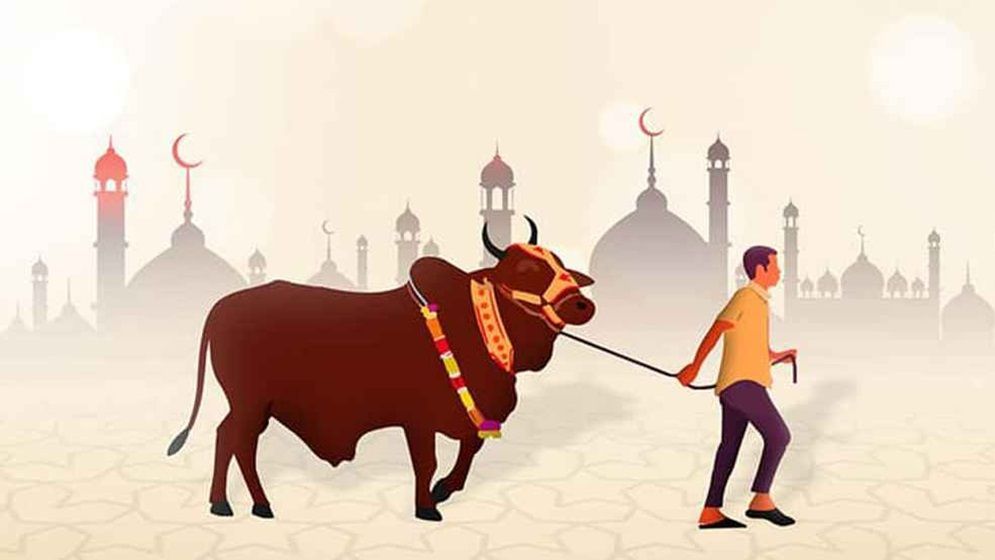
Every year, Bangladesh witnesses an extraordinary spiritual, social, and economic phenomenon during Eid-ul-Adha. Millions of Muslim households across the nation participate in the sacred ritual of Qurbani, which involves sacrificing animals to honor the obedience of Prophet Ibrahim (AS). This monumental religious festival transforms the domestic livestock sector into a multi-billion-taka economic engine within a matter of days, providing vital livelihoods to farmers, traders, butchers, and leather workers, while ensuring widespread protein security for millions of citizens, particularly the underprivileged.
Yet, as the festive prayers conclude and the ritualistic sacrifices commence, a starkly different, highly problematic reality spills onto the streets of our urban and rural centers alike. Rivers of blood run down residential alleys, open-air gutting takes place on public pavements, and a suffocating stench of decomposing organic waste lingers for days. The current livestock processing framework is overwhelmingly informal, deeply decentralized, and tethered to traditional manual practices that fail to meet modern standards of hygiene, safety, and environmental stewardship. To permanently protect public health, preserve our fragile ecosystems, and unlock the true economic potential of our livestock industry, Bangladesh must urgently transition toward a centralized, modern slaughterhouse infrastructure—not just for the three days of Eid, but as a year-round national imperative.
Policy Milestone: Policy Milestone: Prime Minister Tarique Rahman recently directed all relevant national and municipal authorities to ensure that sacrificial waste generated during Eid-ul-Azha is entirely removed within a strict 12-hour window. While this directive reflects a commendable and strong political will to safeguard public health and civic hygiene, it makes a demand to set up long-term solution.
2. The Mathematical Reality: Tracking and Analyzing the Qurbani Boom (2015–2025)
To grasp the sheer magnitude of the waste management, logistical coordination, and veterinary oversight required during this festival, one must look at how rapidly the domestic livestock market has scaled over the past decade. Driven by the rapid growth of small- and medium-scale commercial farms, the enthusiastic involvement of educated young entrepreneurs, and strict government restrictions on cross-border informal cattle imports, Bangladesh has achieved an admirable feat: transitioning from a country heavily reliant on imported Indian cattle into an entirely self-sufficient livestock powerhouse.
The growth trajectory of sacrificial animals over the past decade highlights this massive structural transformation. While these numbers represent a massive triumph for rural wealth generation and food security, processing nearly 10 million large and small ruminants within a hyper-compressed 72-hour window on open city streets represents an ecological and public health ticking time bomb. The complete volume of livestock processed can be observed below:
Year
Sacrificial Animals (Approx.)
Market Dynamics & Key Drivers
2015
8.5 – 8.8 million
Heavy reliance on cross-border informal imports.
2016
9.0 – 9.2 million
Gradual rise in domestic commercial farming initiatives.
2017
9.5 – 9.7 million
Youth entrepreneurs begin entering the agro-sector.
2018
9.8 – 9.9 million
Domestic supply approaches complete self-sufficiency.
2019
10.1 million
The market crosses the historic 10-million mark for the first time.
2020
9.45 million
Market dip due to the COVID-19 pandemic, lockdowns, and economic stress.
2021
9.09 million
Gradual post-pandemic recovery amidst localized supply chains.
2022
9.95 Million
Strong rebound; sharp increase in high-quality local cattle.
2023
10.0 million
Complete stabilization of the domestic-led production model.
2024
10.4 million
Record-high numbers, driven entirely by local commercial operations.
2025
9.36 million
The number of sacrificial animals decrease due to high inflation pressure.
3. The Dark Side of the Street: Public Health & Hygienic Hazards
The deeply ingrained practice of slaughtering cattle and small ruminants in open public markets, on residential roadsides, and inside apartment parking lots poses immediate, acute threats to human life and food safety. Under the humid, hot weather conditions that characterize Bangladeshi summers, exposed biological matter such as blood, offal, and rumen contents putrefy within a.
The author has served as National Consultant for the World Bank Group project (Eco-Securities/SSIL and IRG), National Livestock and Dairy Expert with the United Nations Industrial Development Organization (UNIDO), and National Project Coordinator for the Food and Agriculture Organization (FAO) of the United Nations, along with several other key positions in the livestock and livelihood sectors.







আপনার মতামত লিখুন :